
Additional Resources
MODULE 2
Shifting Attitudes Towards Jews
Shifting Attitudes Towards Jews
Changing Politics in 1939
Changing Politics in 1939
Max’s First Arrest
Max’s First Arrest
Life in the Sawmill
Life in the Sawmill
Returning Home
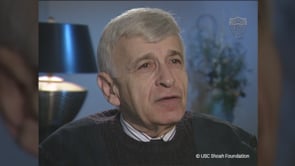
Returning Home
Max’s First Job

Max’s First Job
March 1944 – War Begins
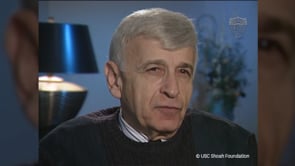
March 1944 – War Begins
The Warning
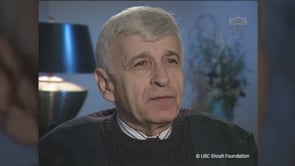
The Warning
Illi Klinka
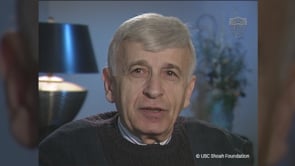
Illi Klinka
Life in the Brickyard
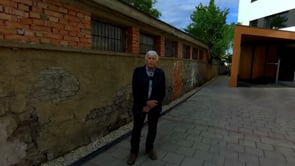
Life in the Brickyard
Transferring from Birkenau to Auschwitz

Transferring from Birkenau to Auschwitz
A hospital in Auschwitz
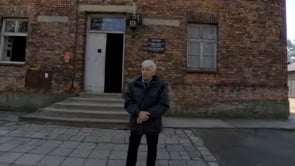
A hospital in Auschwitz
Working in Auschwitz

Working in Auschwitz
Final Days of Auschwitz
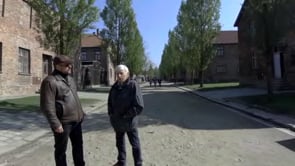
Final Days of Auschwitz
Arriving in Mauthausen

Arriving in Mauthausen
Another March from Mauthausen to Ebensee
Another March from Mauthausen to Ebensee
Conditions in Ebensee
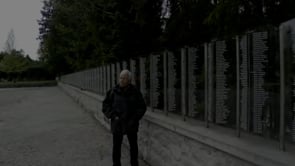
Conditions in Ebensee
MODULE 3
Liberation Part III
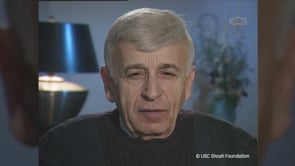
Liberation Part III
Liberation Part IV
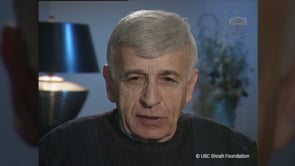
Liberation Part IV
Testifying in the Gröning Trial
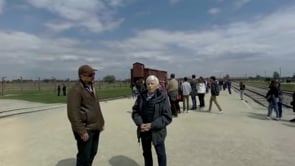
Testifying in the Gröning Trial
Max Eisen: By Chance Alone: A Remarkable True Story of Courage and Survival at Auschwitz (Harper Collins, 2016)
Max Eisen with Kathy Kacer: By Chance Alone: A Remarkable True Story of Courage and Survival at Auschwitz – The Young Reader’s Edition (Harper Collins, 2024)
Information about Max’s Rescuer: Dr. Tadeusz Orzeszko
Documentary Film: The Accountant of Auschwitz
Achtung
A German term for “attention.” Survivors often recount the terror they felt when they heard a guard speak this word. It meant attention was being drawn to them and any number of abuses or acts of violence could be directed toward them in that moment.
Appel
The roll call/counting of prisoners in concentration camps. Prisoners were forced to stand outside in all types of weather, usually without proper clothing, often for multiple hours. These were called for by the commandant of the camp in order to account for all prisoners and /or of the prisoners to witness special punishments or deaths of their fellow prisoners. (Source: Holocaust Museum Houston)
Arbeit Macht Frei
“Work makes you free” is a sign above the gates at Auschwitz. Some other camps had this phrase on display as well. It was intended to deceive prisoners about the camp’s function and provide them with a false sense of calm. (Source: Holocaust Museum Houston)
Aryan
A term used by the Nazis to describe northern European physical characteristics (such as blonde hair and blue eyes) as racially “superior.” (Source: Holocaust Museum Houston)
Antisemitism
Hostility toward or discrimination against Jews. This historical phenomenon has existed for over two thousand years, with the Holocaust the most extreme example of antisemitism. (Source: Montreal Holocaust Museum) For further information on the meaning of antisemitism and how to identify its many different forms, you can visit the International Holocaust Remembrance Alliance website that features a working definition of antisemitism that has been adopted by both the federal provincial governments in Canada. Link: https://holocaustremembrance.com/resources/working-definition-antisemitism
Concentration Camp
Camps in which Jews were imprisoned by the Nazis, located in Germany and Nazi- occupied Europe. There were three different kinds of camps: transit, labour and extermination. Many prisoners in concentration camps died within months of arriving from violence or starvation. (Source: Holocaust Museum Houston)
Death March
Forced evacuations of concentration camp in mates over long distances, under guard and in extremely harsh conditions. It is believed this term was coined by the prisoners themselves. (Source: United States Holocaust Memorial Museum)
Gendarmes
Armed police officers – in Max’s case, Hungarian collaborators with the Nazis.
Hebrew
An ancient language. It is also the language used in Jewish religious services, prayers, and sacred texts, like the Torah.
Holocaust
The Holocaust was the systematic, state-sponsored persecution and murder of six million European Jews by the Nazi regime and its allies and collaborators. (Source: United States Holocaust Memorial Museum)
Kanada
The name given to the storage buildings by the prisoners who worked in them. These buildings held the clothing and other possessions of those Jews who had just arrived into the extermination camps and were usually gassed shortly afterward. Much of the most valuable items were “stolen” by guards or went to the remaining ghettos to be “repaired” in the workshops there. (Source: Holocaust Museum Houston)
Kapo
A prisoner within the camp who is elevated to a position to oversee work duties in that camp. Many Kapos are remembered negatively. (Source: Holocaust Museum Houston)
Mikvah
A mikvah is a pool of natural water, such as rainwater, used for cleansing rituals during various life cycle events. Immersion into the water is used to achieve ritual purity and cleanse the soul.
Nazi
Name for members of the NSDAP, National Socialist Democratic Workers Party, who believed in the idea of Aryan supremacy. (Source: Holocaust Museum Houston)
Orthodox
Someone who follows the traditional form of Judaism, strictly following Jewish law and religious traditions as interpreted by rabbinic authorities.
Passover
Lasting eight days, Passover celebrates the freedom of Israelites from Egyptian slavery.
Payos
Can also be spelled “peyos,” “payot,” or “payes.” It refers to the sidlocks or sidecurls worn by some men and boys in the Orthodox Jewish community.
Rabbi
A Jewish scholar or teacher who studies and teaches Jewish law.
Raus
A German word that means “out” or “get out.” Survivors recall hearing this word frequently, particularly upon arrival on the trains at a concentration camp.
SS
Schutzstaffel; the German army’s elite guard, organized to serve as Hitler’s personal protectors and to administer the concentration camps. (Source: Holocaust Museum Houston).
Seder
A special, ceremonial dinner held on each of the first two nights of Passover.
Selection
A term used by the Nazis to denote the sorting of deportees or prisoners into two groups—those who were to do forced labor, and those who were to be killed. (Source: Yad Vashem).
Shoah
The Hebrew word for Holocaust. (Source: Holocaust Museum Houston).
Synagogue or Shul
A space where religious Jews gather to practice their faith.
Torah
The first five books of the Hebrew Bible. (Source: Holocaust Museum Houston).