

Module 1 —
A Fragile Peace: The Interwar Years in Europe
Introduction
When Holocaust survivor Max Eisen spoke about the Holocaust and how this enormous human tragedy happened, he would say, “It started with words, and it ended in terrible places.” He wanted people to understand that the Holocaust did not begin in gas chambers and crematoria but with smaller, everyday actions; hate-filled words and intolerant attitudes that grew and led to violence and mass murder.
In this first module, you will explore the inter-war period in Europe. From the end of World War I and Adolf Hitler’s rise to power, to the discriminatory policies that were increasingly restrictive in Germany. These policies became a blueprint for countries that Germany occupied once the Second World War started. You will also have a glimpse into fragments of Jewish life during this period. While antisemitism was a concern for Jews living in Europe during this period, as it has been for centuries, it was also a period where Jews in countries like Germany were experiencing more freedom than ever before. You will also hear from Max as he shares memories from childhood, growing up Jewish in Moldava, Czechoslovakia.
Timeline
Review the timeline from January 30, 1933, to August 23, 1939, to explore key events of the Holocaust that occurred in Nazi Germany and its expanding territory before the start of the Second World War.
Questions:
1. The Nazis viewed the Jewish population as their primary enemy, but they also created a list of ‘enemies of the state,’ those who did not fit or comply with Nazi beliefs. Identify 3 key events that restricted citizenship rights for Jews or other ‘enemies of the state’ in Germany during the inter-war period.
2. How do you feel these events would impact German citizens? Think about the impact from different perspectives: victims, perpetrators and bystanders.
Map
Select 3 European countries and compare the Jewish population of those countries to the Canadian Jewish population in 1899 and 1931. Calculate the percentage of the Jewish population in each of the countries you select. What similarities do you find? Differences? Do you notice any patterns?
Artefacts
Today, we carry thousands of photographs around on our phones. We can pull our devices out and capture a moment in a split second, whenever we choose. Photographs, however, were not always so accessible. The first camera that could capture and record an image was created in 1816. It was not easily portable, it certainly could not fit in your pocket, and the process was long and difficult. While there had been progress in photography technology by the 1930s, photos remained rare.
SYNAGOGUE

TAILORING WORKSHOP

SHOE STORE

CENSUS PHOTOGRAPH

“Reading” Photographs:
- Who created this primary source?
- When was this photo taken?
- Why was the photo taken?
- What is the subject’s point of view?
- Describe what you see in the photo.
- Why is this photograph important today?
- How has the meaning of this photograph changed over time?
OPTIONAL: Work with another student who chose the same photo as you. Compare your responses and discuss any differences you found. Use your discussion to add to your personal response.
Testimony
Max shared his testimony with audiences all over the world through a variety of forums. The video testimony we are drawing on for this program include his February 1995 Testimony for the USC Shoah Visual History Archive and his July 2018 testimony recorded for a virtual reality program with the USC Shoah Foundation.
Jewish Life Pre-Holocaust
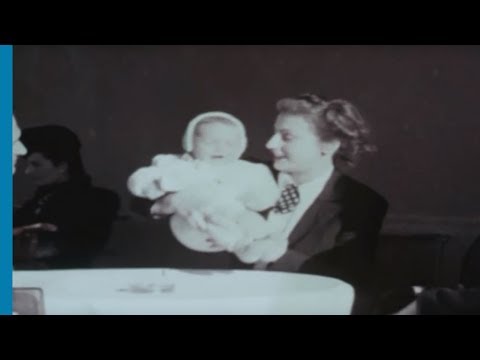
Jewish Life Pre-Holocaust
What Is Antisemitism?
What Is Antisemitism?
Source: UNESCO. (2025, April 24). What is antisemitism. [Video]. YouTube.
Hitler's Rise to Power
Hitler's Rise to Power
Source: Gendler, A., & Hazard, A. TED-Ed. (2016,July 18). How Did Hitler Rise to Power? [Video]. YouTube.
Home & Family in Moldava
Home & Family in Moldava
Memories of School
Memories of School
Growing up Jewish
Growing up Jewish
Questions:
- Write a paragraph describing Jewish life in Europe before the Second World War.
- How was the end of World War I used by Hitler and the Nazis in their rise to power?
- What role did historical antisemitism play in the development of Nazi party ideology?
- Give two examples of how Hitler drew on fear, anger and/or bigotry to persuade the German public to support him.
- Choose three adjectives to describe Max’s childhood growing up in Moldava. Provide an example from Max’s testimony to support each adjective you choose.
- How can individual testimonies deepen our understanding of the Holocaust?