

Module 3 –
“Never Again?”: Liberation & the Post-War Years
Introduction
Max was liberated from Ebensee concentration camp on May 6, 1945. He wrote about his memory of this moment in his memoir:
“… an inmate shuffled in with his wooden clogs and made a surprising announcement. He said the SS guards were no longer in the watchtower and there was a white flag flying at the main gate… I was very sick and weak, but I marshalled my strength and climbed over bodies on the floor, determined to get out of the barracks. In that moment, I felt that getting outside meant life, and that if I stayed inside, where I was surrounded by death, I would surely perish…At that moment, the gate came crashing down and a tank with a white star barrelled through. What a sight it was! Several African American soldiers were sitting on the turret, their eyes wide as they gazed in horror at the scene before them and smelled the odour of thousands of decomposing bodies… the devastation here was more horrific than any battlefield conditions they had witnessed. Had they arrived mere hours later, many more of us would have been dead.”
Source: Max Eisen, By Chance Alone (Harper Collins, 2016), 168-169.
Max, and all who had survived imprisonment in the Nazi concentration camp system, were free! But what does freedom mean in the face of such enormous loss and devastation? When Max was liberated, he began to process and understand all that he had lost – parents, siblings, and grandparents, aunts, uncles and cousins, friends, his home, his community. How does one even begin to process the enormity of this loss and grief? With an incredible amount of courage and resilience, Max began to recover. It took time. He eventually made his way to Canada where he started a successful career, married, had a family and eventually became a Holocaust educator. He has spoken to audiences of all ages across Canada and around the world. He even provided testimony at two Nazi war criminal trials in Germany in 2015 and 2016. He dedicated his life to carrying out his father’s request to “tell the world what happened” to his family and millions of Jews across continental Europe during the Holocaust. Max’s message to his audiences when they are witness to antisemitism or any form of hate: “We all need to stand up and say, we will not allow you to do this. Not in my school, not in my city, not in my country.”
Timeline
Review the timeline from September 20, 1945 to November 20, 1945 to explore key events that occurred in the months immediately following liberation and the end of the Holocaust and the Second World War.
Questions:
- Do you feel justice can be found in the aftermath of a genocide? Explain your opinion.
- Aside from holding perpetrators accountable and offering punishment for crimes committed, what do trials like the Nuremberg trials do for communities impacted by atrocities?
Map
Return to the same countries that you reviewed in Module 1. Now look at the Jewish population in 1948. Compare the Jewish population pre-war to post-war. As you compare these numbers, reflect on how hateful ideologies that demonize and dehumanize groups, like the Jewish community during the Holocaust, contribute to crimes against humanity or genocide.
Artefacts
In order to investigate and understand primary sources, historians think critically about objects and ask questions. Choose one of the documents in this module and begin by reading what information exists about the document.
IDENTIFICATION CARD
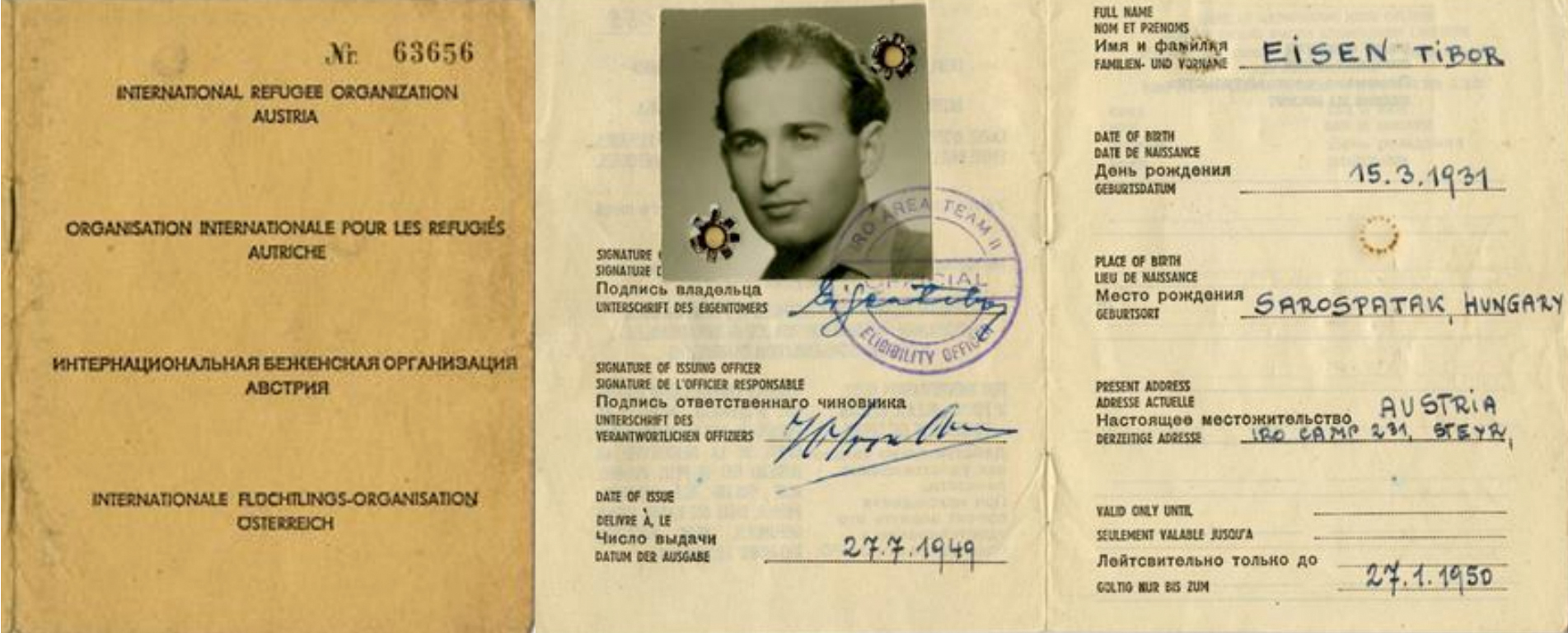
CERTIFICATE OF IDENTITY

IMMIGRATION CARD

BIRTH CERTIFICATE

CANADIAN CITIZENSHIP CARD

What is in a Document?
Now that you know a bit about the document, think about what information is missing. What else would you like to know? Develop at least three questions that you would ask to learn more. Finally, what does this document tell us about Max?
OPTIONAL: Choose one of your questions and research to find an answer.
Testimony
Max shared his testimony with audiences all over the world through a variety of forums. The video testimony we are drawing on for this program include his February 1995 Testimony for the USC Shoah Visual History Archive and his July 2018 testimony recorded for a virtual reality program with the USC Shoah Foundation.
Liberation Part I
Liberation Part I
Liberation Part II
Liberation Part II
Returning Home
Returning Home
Journey to Canada
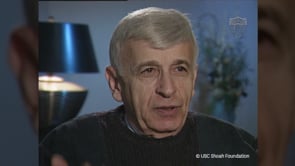
Journey to Canada
Building a Life in Canada
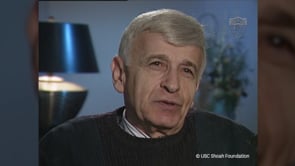
Building a Life in Canada
QUESTIONS:
- After liberation, what challenges did Max and other survivors face?
- Describe Max’s homecoming to Moldava.
- Antisemitism did not end with the end of the Second World War and liberation of the concentration camps. Expressions of antisemitism today continue to draw on imagery and language from the Nazi era. Describe three examples of when the use of Holocaust language and imagery is problematic.
TESTIMONY – MAX’S LEGACY:
Watch the LESSONS videos in Module 3 and answer the questions below.
- What, do you feel, is Max’s legacy?
- How can testimonies be used to centre the voices of victims and show the diversity of experiences during the Holocaust?
- What questions do you have for further learning?